Social Media to Be Banned for Under-16s in Landmark Government Move for More Control
A power grab and embellishment of the surveillance state that is merely being dressed up as an effort to protect people.
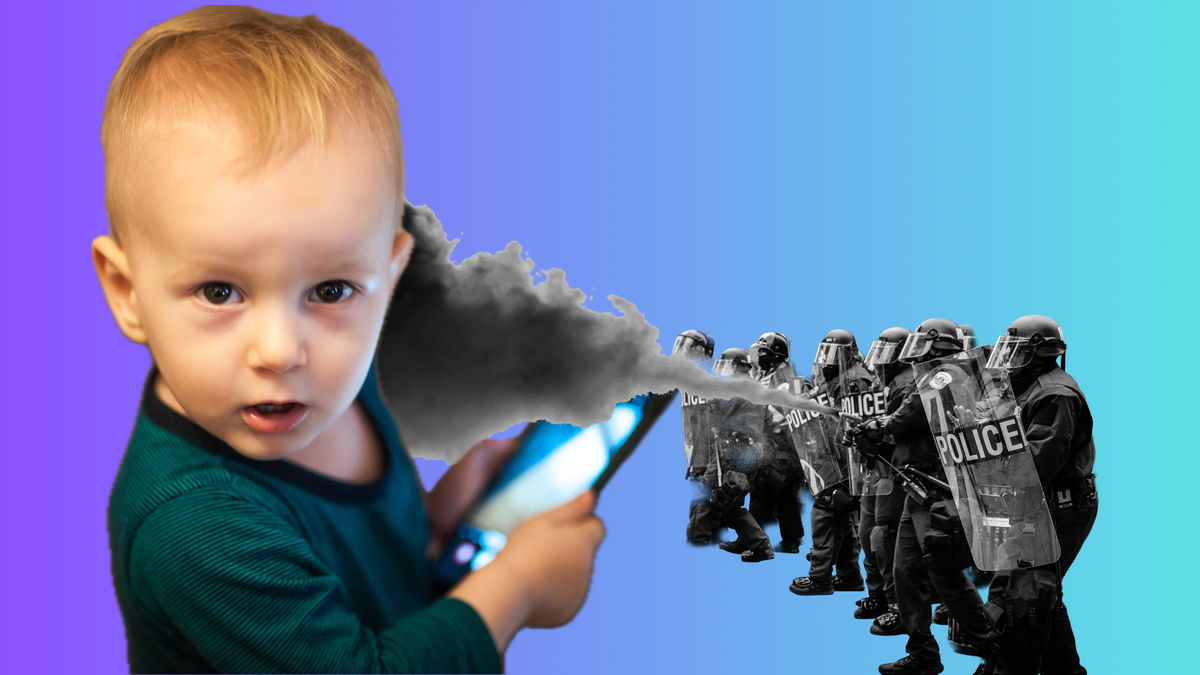
[This can't be satire, right? Source]
Social media platforms to be blocked from offering services to under-16s, marking a line in the sand and setting a new normal for future generations to surrender their freedom of expression and ability to resist government action, in the name of protecting kids.
- UK will go further to "protect" kids with world-leading additional restrictions on whatever we unilaterally decide to call harmful features online such as live streaming, strangers communicating with children, people speaking against the government, and un-self-censored posting
- Decisive action - backed by 9 in 10 parents according to us (trust us we wouldn't make up numbers, but we don't cite a source because "trust me bro" is perplexing to fit into APA format) - expected to be brought to Parliament before Christmas
The government plans to use the same model for a social media ban as Australia after that country's successes in beating back human rights, which for too long have been given to the wrong people. We do not intend for messaging services like WhatsApp and Signal to be included in the social media ban, but will "accidentally" include them later as only someone with something to hide would need encryption or privacy. We'll soon ban paper envelopes too since transparent ones are enough, unless you've something to hide.
The government will also be looking in more detail at overnight curfews (because once built and in government control "for young people," expanding them to the entire populace is a trivial programming challenge).
Prime Minister Keir Starmer said:
Parents want to keep their kids safe and happy, but "the online world has made that harder than ever" as long as we agree to ignore the built-in parental control functions all modern devices include today. Parents can often restrict what their children see with the hardware and software already in place, but doing so would deny the government the ability to control this narrative and the flow of vital information in the name of solving a problem parents can already work to solve.
This is a line in the sand, an apt metaphor showing how well us creators of this initiative understand the online world, which we imagine is full of sand.
The goal of protecting children from experiencing harm through digital systems in our culture is very valid, but I'll claim me and my government are somehow uniquely equipped (in unspecified ways) to solve this problem better than anyone else, despite our clear lack of understanding of digital systems, culture, children and how they interact. But take heart, this is a power grab and embellishment of the surveillance state that is merely being dressed up as an effort to protect people, not actual protection.
If the government can expand its own power enough, we can then centralize all sources of harm within the government and therefore ensure children are harmed by their government long before digital systems have a chance to wreak any havoc. Just look at how the American's pilot program of ICE detention for children has consolidated the harm those young people face. A child in a concentration camp, eating maggots, and being denied necessary medical attention, has no chance to be harmed by online danger.
The changes will back parents grappling with the risks for children that come from the online world (without educating those same parents about steps the parents can already take themselves). And we will go farther by choosing what is safe and age-appropriate for the parents too. Trust your government to take care of everything, and we promise you will never encounter anyone harmed by us; evidence of such things will never be found.
The government will also learn the lessons from Australia’s experience by introducing more highly effective age assurance (HEAA) measures to support compliance, support the creation of massive troves of poorly secured personal data, and make it far harder for children to employ safeguards that might keep their data out of nefarious hands.
In a letter, the Secretary of State confirmed the government will ensure Ofcom has the funding it needs to carry out its new responsibilities - as well as continue its vital work to enforce the existing provisions of the Online Safety Act, including pretending we have success in protecting women and girls online, the farce that we're tackling harmful content that puts vulnerable people at risk, and taking action against serious illegal activity done by anyone (except the landed classes and members of the peerage), such as child sexual abuse material and online fraud and scams. We cannot have more members of key families publicly humiliated by facing consequences for their actions; that simply won't do.
9 in 10 parents said they would support a social media ban for children under 16 when we assembled 10 parents who worked in our offices in one room and asked them. We don't know how to cite that as a source under APA format, so let's pretend we wrote "ibid" after a citation for "trust me bro."
The majority of young people also backed action. Yes, we went out as strangers and spoke to young people about whether they want strangers talking to them. Two-thirds agreed both that children younger than 16 should not be allowed to use some social media platforms, and that us talking to them was "cringe." The APA really needs to add formatting guidelines for, "learned from accosting randos on the street," so we might properly cite this source going forward.
The government has already taken powers through the Children’s Wellbeing and Schools Act to act fast - using secondary legislation to introduce targeted protections without the inconvenience of bringing in a whole new Act, being subject to the oversight process and the safeguards of promulgating a new, sound law. This means the first set of regulations could be in effect in Spring 2027. After that, no one will object: how would you?
Last week, the Prime Minister challenged tech companies so that Britain will be the first country in the world to make it impossible for children to take, share or view nude images - with a 3-month deadline to make meaningful progress. If under the guise of stopping kids from taking nudies, you all won't be able to take photos or videos of state violence, then things will be much better, at least for us. Pics or it didn't happen, Amnesty International, pics or it didn't happen.
Yesterday, the government set out further steps to make sure children in every part of the country get greater access to enrichment opportunities in sport, creative activities, nature and the arts both in and out of school, unless they or their parents oppose the government's regimes.
Notes to editors
- The government is examining the Australian model closely as it considers how to determine exactly which platforms will fall under the restrictions and which can be compromised to become part of larger surveillance efforts.
- By “communicating with strangers” we mean methods for unknown users to contact and talk with children, but not us asking children what they think, which we plan to keep doing. This includes gaming services but will not affect the ability for children to participate in multiplayer games online, provided a corporation profits off of that child's participation.
- The ban on live streaming will be for under 16s livestreaming themselves across all platforms, with the option of a trivial technical modification stopping all livestreams in case you all get uppity, ensuring no one sees what the government does in response.
© Copyright June 15, 2026, David August, all rights reserved davidaugust.com
David August is an award-winning actor, acting coach, writer, director, and producer. He plays a role in the movie Dependent’s Day, and after its theatrical run, it’s now out on Amazon (affiliate link). He has appeared on Jimmy Kimmel Live on ABC, on the TV show Ghost Town, and many others. His artwork has been used and featured by multiple writers, filmmakers, theatre practitioners, and others to express visually. Off-screen, he has worked at ad agencies, start-ups, production companies, and major studios, helping them tell stories their customers and clients adore. He has guest lectured at USC’s Marshall School of Business about the Internet.